
Community
Northern California Roads in Disrepair: Redding, Red Bluff and Other Cities Face Costly Repairs
Rough pavement raises safety concerns across Northern California as communities face repair needs and drivers continue paying substantial transportation taxes and fees.
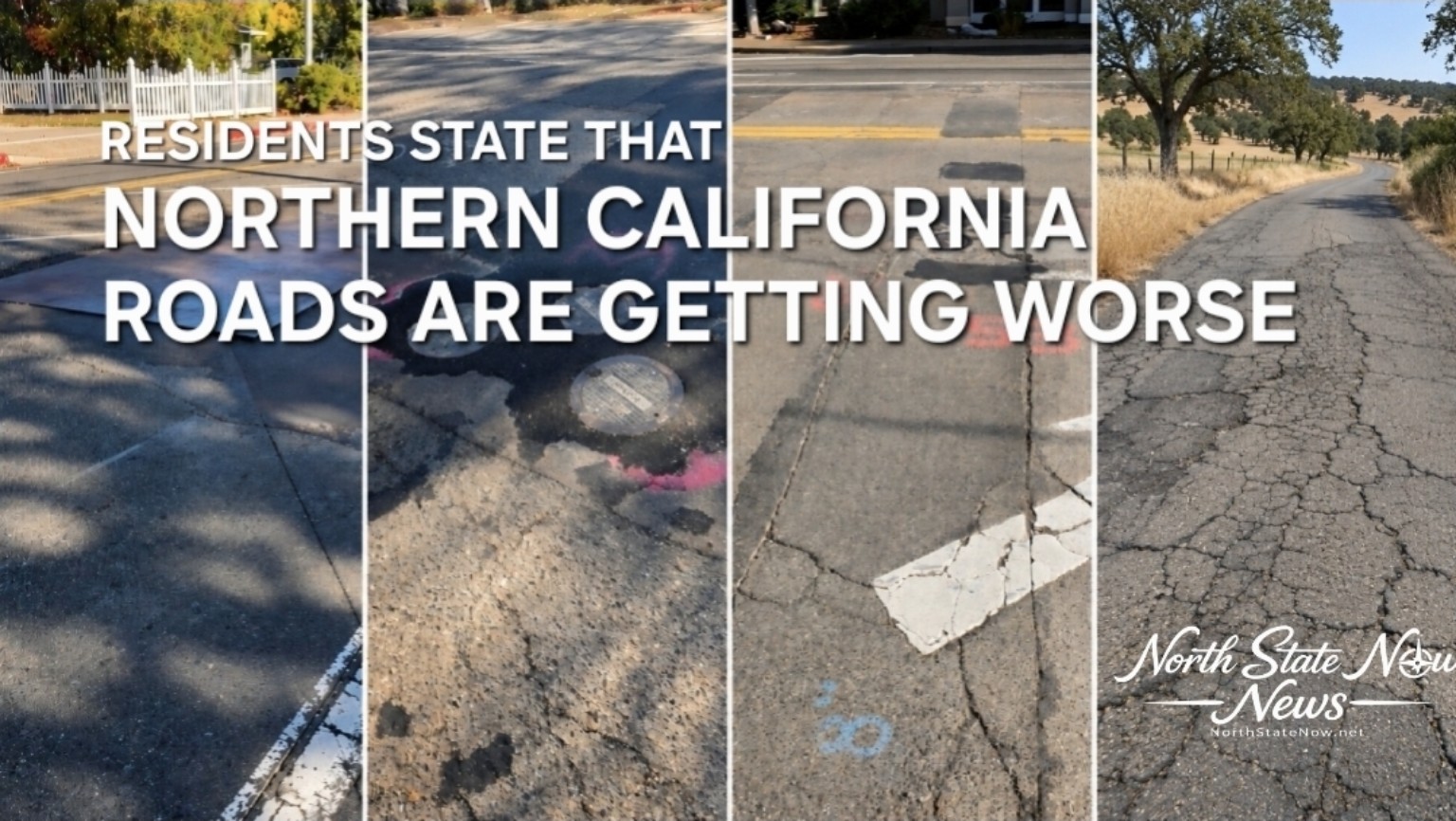
Potholes, broken pavement, uneven patches and steel road plates can be more than an uncomfortable bump. They can create dangerous conditions for motorists and people traveling by motorcycle, bicycle, electric bike or scooter.
An unexpected dip, raised edge or damaged section can leave little time to react. Drivers may face tire or wheel damage, while people on two wheels face the added danger of losing balance or control. Wet weather can make the situation more difficult when standing water conceals pavement damage.
Across Redding, Red Bluff, Chico and other Northern California communities, documented pavement problems raise a pressing question...
How long must road users navigate deteriorating streets while continuing to pay substantial transportation taxes and fees?
California’s fuel tax burden makes that question especially relevant. The U.S. Energy Information Administration reported that California had the nation’s highest state gasoline taxes and fees as of January 1st, 2026, at approximately 70.9 cents per gallon, excluding federal gasoline tax.
California’s state gasoline excise tax alone increased again on July 1st, 2026, rising from 61.2 cents to 63.4 cents per gallon. That increase was an annual inflation adjustment under existing law, rather than a newly enacted tax.
Drivers also pay vehicle registration charges. DMV lists a Transportation Improvement Fee ranging from $33 to $231 based on vehicle value, with revenue used for road and bridge repairs and maintenance.
Those charges do not disappear because a particular street remains damaged. For road users facing rough pavement, the concern is both safety and accountability: substantial transportation charges continue while significant repair needs remain.
Fuel taxes and fees support transportation improvements, including projects discussed below. Their continued collection does not establish that no work is being done, but the documented backlog shows that paying more has not eliminated the need for major repairs.
From the northern Sacramento Valley to the North Coast, public records describe communities working to catch up. The conditions vary by location, and older pavement assessments show the scale of the challenge rather than the current condition of every street.
In Redding, recent observations and photographs highlight rough pavement along Mistletoe Lane between Churn Creek Road and Victor Avenue, along with concerns about Victor Avenue between Highway 44 and Hartnell Avenue. The photos show steel road plates, patchwork, cracks and uneven surfaces around utility covers.
Redding previously acknowledged flood damage on Victor Avenue. In January 2026, the city said temporary pothole patches repeatedly washed out before dry weather allowed a longer lasting repair.
The city’s January announcement also described planned transportation improvements involving resurfacing, with work extending north toward Mistletoe tentatively anticipated in 2027 and 2028.
A separate water main project announced in July covered Mistletoe from Carpenter Lane to Victor Avenue and Victor from Manchester Drive to Mistletoe. Work was scheduled through November 2026. An October 15th filing also proposed asphalt replacement involving Mistletoe, Browning Street, Canby Road and Wood Lane. Those announcements do not establish when every rough section will be repaired.
Red Bluff’s road problems have received formal scrutiny.
The Tehama County Grand Jury’s report for 2024 through 2025 cited a December 2023 survey giving the city’s streets an average Pavement Condition Index score of 39 out of 100 across 135.99 lane miles. The report identified inadequate funding and increasing costs associated with delayed maintenance.
Red Bluff agreed in its August 6th, 2025, response that road conditions presented increased safety risks and that deferred maintenance had made some repairs more expensive. Its August 2026 maintenance summary reported 6.5 tons of material applied to potholes.
Chico also has documented pavement rehabilitation needs.
Caltrans identified major pavement distress along Highway 32 between Muir Avenue and Highway 99 in its rehabilitation project description. The approximately $37.2 million project includes pavement and drainage work, with construction scheduled to finish in fall 2026. That description explains the conditions that justified the project, rather than confirming those same conditions remain throughout the corridor today.
Chico’s city project list for 2026 includes rehabilitation on East 20th Street between Highway 99 and Notre Dame Boulevard, South Park Drive between Manzanita Avenue and Pine Street, and Ceanothus Avenue between Manzanita Avenue and East Avenue.
In Eureka, the city reports that many streets have deteriorated beyond the point where basic pavement preservation is sufficient and require grinding and paving.
Eureka’s 2022 assessment placed its street network at an average score of 61, classified as fair. Its programmed maintenance and rehabilitation list for 2026 includes portions of Second, Sixth, Seventh, E, F, G and Harris streets, along with Albee Street, Campton Road and N Street. A programmed project list does not confirm which repairs have been completed.
Ukiah, Willits and Fort Bragg face substantial repair needs as well.
The Mendocino Council of Governments’ February 2026 regional transportation plan cites a 2021 pavement management update documenting widespread deterioration. The plan describes approximately 51 percent of Ukiah’s street system, 53 percent of Willits’ system and 26 percent of Fort Bragg’s system as being in poor or very poor condition.
Those figures reflect the earlier assessment and should not be treated as new street inspections. The plan notes that an updated pavement management study was planned through the agency’s fiscal year 2025 to 2026 work program.
The regional plan also identifies local sales tax funding supporting street improvements in these communities. Ukiah’s urban core rehabilitation project includes Main, Perkins and Gobbi streets, with roadway improvements alongside utility, sidewalk and bicycle infrastructure work.
Together, the records show that rough roads are a concern across multiple Northern California communities, even as agencies invest in repairs.
Drivers and riders should watch for uneven pavement, leave room to react and use extra caution around roadwork. During wet weather, standing water may conceal pavement damage.
When reporting a road problem, include the street, nearest intersection, direction of travel and a description of the hazard. Photos taken from a safe location can also help pinpoint the concern.