
Community
Flock cameras in Northern California: Shasta sheriff addresses privacy concerns regarding Flock Cameras
The Shasta County Sheriff’s Office released an explanation of its Flock Safety cameras, addressing license plate scans, data retention, search oversight and sharing as residents across Northern California question their implementation.
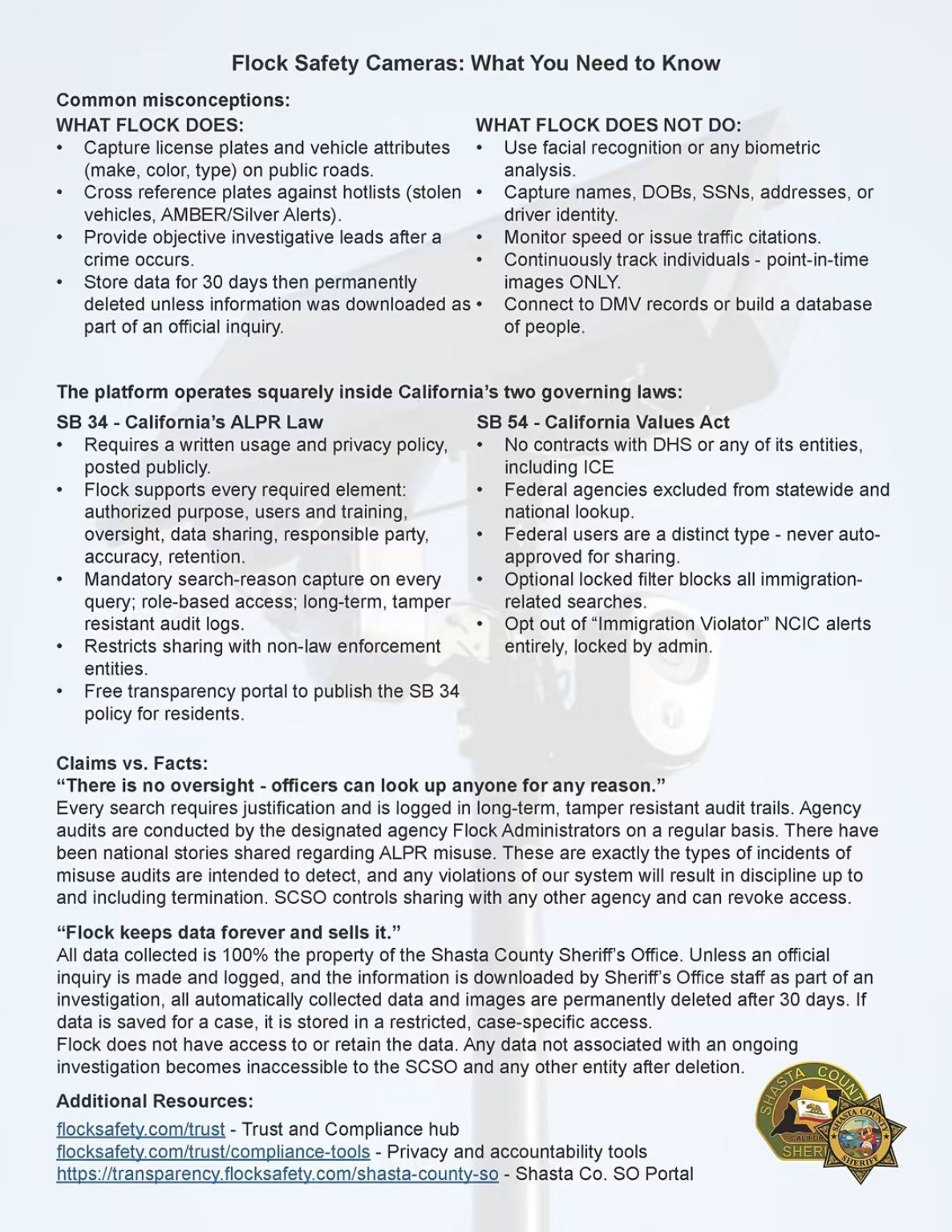
Flock cameras are drawing frustration from many residents across Northern California as questions about license plate scanning, privacy and access to vehicle records continue. In Shasta County, the Sheriff’s Office released an explanation on November 10th outlining what it says its Flock Safety cameras collect, how searches are monitored and when images are deleted.
The agency describes the cameras as an investigative tool for identifying vehicles connected to crimes and alerts. Its graphic also addresses concerns about misuse, data storage and sharing with other agencies.
For residents, the questions go beyond whether the cameras can help solve a case. What information is recorded when someone drives past, how long is it kept, and who can search it?
What do Flock cameras record?
According to the Shasta County Sheriff’s Office, Flock cameras capture license plates and vehicle characteristics, including make, color and type, on public roads.
The system compares plates against alert lists that can include stolen vehicles and vehicles associated with AMBER or Silver Alerts. The agency says those images can also provide investigative leads after a crime.
The graphic describes the records as images captured at particular moments, rather than continuous tracking of individuals.
Do Flock cameras use facial recognition or issue tickets?
The Sheriff’s Office says its Flock system does not use facial recognition or biometric analysis. It also says the cameras do not monitor speed or issue traffic citations.
According to the graphic, the system does not capture names, birth dates, Social Security numbers, addresses or driver identities, and does not connect to DMV records or build a database of people.
Those statements describe what the agency says the camera platform collects and connects to. They should not be read as a claim that a vehicle image could never help investigators identify someone during a separate investigation.
How long does Shasta County keep Flock camera data?
The Sheriff’s Office says automatically collected images and data are permanently deleted after 30 days unless staff download information as part of an official, logged inquiry.
Information preserved for an investigation is kept with restricted access tied to that case, according to the agency. The graphic does not give a separate retention deadline for those saved case records.
The agency also says it owns the information collected by its system and that deleted records become inaccessible to the Sheriff’s Office and other entities.
Who can search the records, and how is access monitored?
According to the Sheriff’s Office, every search requires a documented reason and is recorded in an audit log designed to resist tampering. Access depends on a user’s assigned role.
Designated agency Flock administrators conduct regular audits, the graphic says. It acknowledges national reports of automated license plate reader misuse and says violations involving its system can lead to discipline, including termination.
The Sheriff’s Office also says it controls sharing with other agencies and can revoke access. The release does not specify how frequently audits occur or provide the results of any completed audit.
What does the release say about privacy and immigration searches?
The graphic presents the platform as operating within California’s automated license plate reader law, SB 34, and the California Values Act, SB 54. That is the Sheriff’s Office’s description of compliance.
It describes written privacy policies, search documentation, training, oversight and access controls. It also lists restrictions involving federal access and features intended to prevent immigration related searches.
Some of those features are described as optional, including a locked filter for immigration related searches and an option to exclude certain immigration alerts. The graphic does not identify which optional settings Shasta County has enabled or provide a complete list of agencies with access to its records.
Questions remain for Northern California residents
For residents upset about the implementation of Flock cameras in Northern California, the Shasta County explanation provides the agency’s account of how its system works. It does not establish the policies or settings used by every other department in the region.
The release also does not list Shasta County camera locations, the number of cameras, program costs or a complete sharing roster. Those details would provide additional context for residents weighing the system’s investigative value against concerns about collecting records of everyday travel.
The supplied Sheriff’s Office graphic accompanies this story and includes an address for its Flock transparency portal.